Beam Health resource center
Our most recently released content and assets
 Blog Post
AI did what to that claim?
Revenue cycle automation should make work easier without making decisions impossible to explain. Here is why audit trails matter as AI takes on more billing work.
 Blog Post
The practice manager’s tab problem
A medical practice can have software for nearly every job and still leave its staff connecting all of it by hand. Here is what that hidden work looks like—and what to do about it.
 Blog Post
Your A/R days are creeping up. Here’s where to look first.
A/R days become much more useful when you stop treating the number as a score and start using it as a clue. Learn how to spot hidden payer and workflow bottlenecks and trace delayed claims back to their source.
 Blog Post
Built into your EMR or built to work with it? Choosing the right healthcare AI
EMR vendors are adding AI quickly, and for some practices native tools are the simplest fit. But as AI reaches intake, scheduling, billing, communication, and operations, the more important question becomes: where does your practice need it to work?
 Blog Post
The best credentialing software does more than credential
Credentialing rarely gets attention when it's working — but a delayed enrollment or expired license quickly turns "just paperwork" into a financial problem. This post compares the leading credentialing platforms, walks through what to look for, and asks the question most buyers forget: what happens after the provider is credentialed?
 Blog Post
Small IT problems, big clinic headaches
A password stops working, a printer gives up, someone can't get into the EMR — none of it sounds like an emergency, until the waiting room is full. This post looks at why a healthcare IT help desk earns its keep on the ordinary problems: monitoring that catches issues early, automatic fixes for the common ones, and intelligent escalation for everything else.
 Blog Post
Your AI scribe wrote the note. Now what?
AI scribes have gotten very good at writing notes — so "Does it generate a note?" is no longer the question. This post walks through what actually separates the crowded field of ambient documentation platforms: structured EHR population, specialty customization, the review experience, time to finished chart, and what happens downstream in coding and claims.
 Blog Post
Switching EMRs doesn't have to mean risking your data
Changing EHR systems is one of the biggest operational projects a practice can take on — and the biggest technical worry is what happens to patient data. This post explains how modern migration works: one-way vs. bidirectional sync, API vs. browser-based integrations, audit logs, and why human review checkpoints still matter.
 Blog Post
The journey to your waiting room starts on Google
When patients need a doctor, the journey almost always starts with a Google search. This post breaks down local SEO for medical practices — your website, reviews, Google Business Profile, and paid search — and why the fastest-growing practices connect marketing with operations as one patient journey.
 Blog Post
Your revenue cycle starts long before the claim: here's how AI is connecting the dots
By the time a claim reaches the billing team, most of the important work has already happened. This post walks through how connecting scheduling, intake, documentation, coding, and claim validation prevents denials before they occur — and how claim analytics feed back into the workflow to create an ever-improving loop.
 Blog Post
Your front desk isn't bad at their job. They're just doing too many jobs.
When the front desk feels overwhelmed, the instinct is to hire more staff — but the real problem is that patient registration has quietly become a ten-step workflow with one team coordinating all of it. This post breaks down what true online patient registration should automate, and why the payoff is less burnout, not fewer people.
 Blog Post
The real promise of healthcare AI has nothing to do with technology
The fear with healthcare AI is that it replaces clinicians. In practice, the most valuable AI removes the administrative work — documentation, eligibility, reminders, billing prep — that pulls providers away from patients. This post makes the case that good automation leads to more human care, not less.
 Blog Post
Electronic vs. digital patient intake forms: they sound similar, but they're not
Most clinics have ditched paper intake, but electronic forms and digital intake are not the same thing. Electronic forms just digitize the paperwork; digital intake automates the workflow behind it — real-time eligibility, EMR updates, and pre-visit chart prep. This post breaks down the difference with a side-by-side comparison.
 Blog Post
The best coding software doesn't start with codes
Most CPT and ICD-10 coding tools sound identical — faster coding, fewer denials. The real difference is whether they just look up codes or actually read documentation, suggest modifiers, validate coding, and surface missed revenue. This post covers what to look for, with a lookup-vs-assistance flow.
 Blog Post
Will AI replace your front desk staff? Probably not. Here's what is more likely to happen.
The fear with healthcare AI is that it replaces jobs — but most clinics want fewer bottlenecks, not fewer people. This post breaks down what automation actually changes at the front desk, with a before-and-after workflow comparison and a look at where human interaction still matters most.
 Blog Post
The technology problems slowing down your clinic and how an IT help desk speeds it up
Most healthcare IT pain isn't major outages — it's the steady drip of small problems: locked accounts, offline printers, scanners that stop uploading. This post breaks down what a healthcare IT help desk actually does, why proactive monitoring beats reactive fixes, and how Beam Support acts as a first-line place to start when something breaks.
 Blog Post
How to choose patient intake software: a practical checklist for modern clinics
Patient intake software now handles registration, eligibility, consent, scheduling, and chart prep — which makes it harder to evaluate. This practical checklist covers the questions worth asking, with an interactive intake stress test and a basic-vs-modern comparison to help you tell real automation from automated data collection.
 Blog Post
How healthcare ended up with 15 logins and still more work
Most clinics aren't short on software — they're managing too many disconnected systems. This post explains why the next phase of healthcare AI is about connecting workflows that already depend on each other, not adding more standalone tools, and what unified operations mean for staff and patients.
 Blog Post
The best denial is the one that never happens
Most denials trace back to small, preventable issues — a missing modifier, an expired insurance ID, a payer-specific rule. This post walks through how claim scrubber software, NCCI edits, and payer rule validation work together to catch problems before submission instead of after.
 Blog Post
Healthcare AI is only as trustworthy as the infrastructure behind it
Clinics are no longer just asking whether AI works — they’re asking whether they can trust how it handles patient data. This post walks through what HIPAA, SOC 2 Type II, and ISO 27001 actually mean for AI-powered healthcare, and the operational questions every practice should ask before adopting a platform.
 Blog Post
From search to scheduled: what actually drives patient growth
Most clinics are running ads, updating their site, and asking for reviews — but the pieces are often disconnected. This post walks through a four-step framework that ties SEO, reputation, tracking, and follow-up into one workflow that turns visibility into booked patients.
 Blog Post
Real-time insurance eligibility verification: faster check-ins, fewer surprises
Eligibility errors are one of the most common — and most preventable — causes of denied claims. This post explains what real-time 270/271 verification actually means, how Beam embeds it into intake, and why catching coverage issues before the visit stabilizes everything that follows.
 Blog Post
Revenue cycle automation that starts before the claim: Coding, claim scrubbing, and denial prevention
Most denials trace back to issues that started days or weeks before the claim was submitted. This post walks through how Beam improves claim quality upstream — better coding inputs, modifier recommendations, full-picture claim scrubbing, NCCI validation, and clean 837P generation.
 Blog Post
When a clinic visit feels easy, here's what's actually happening
Patient experience is shaped by smaller operational moments — registration, the flow of the visit, the clarity of the bill. This post walks through what happens before, during, and after a visit when the underlying systems are connected.
 Blog Post
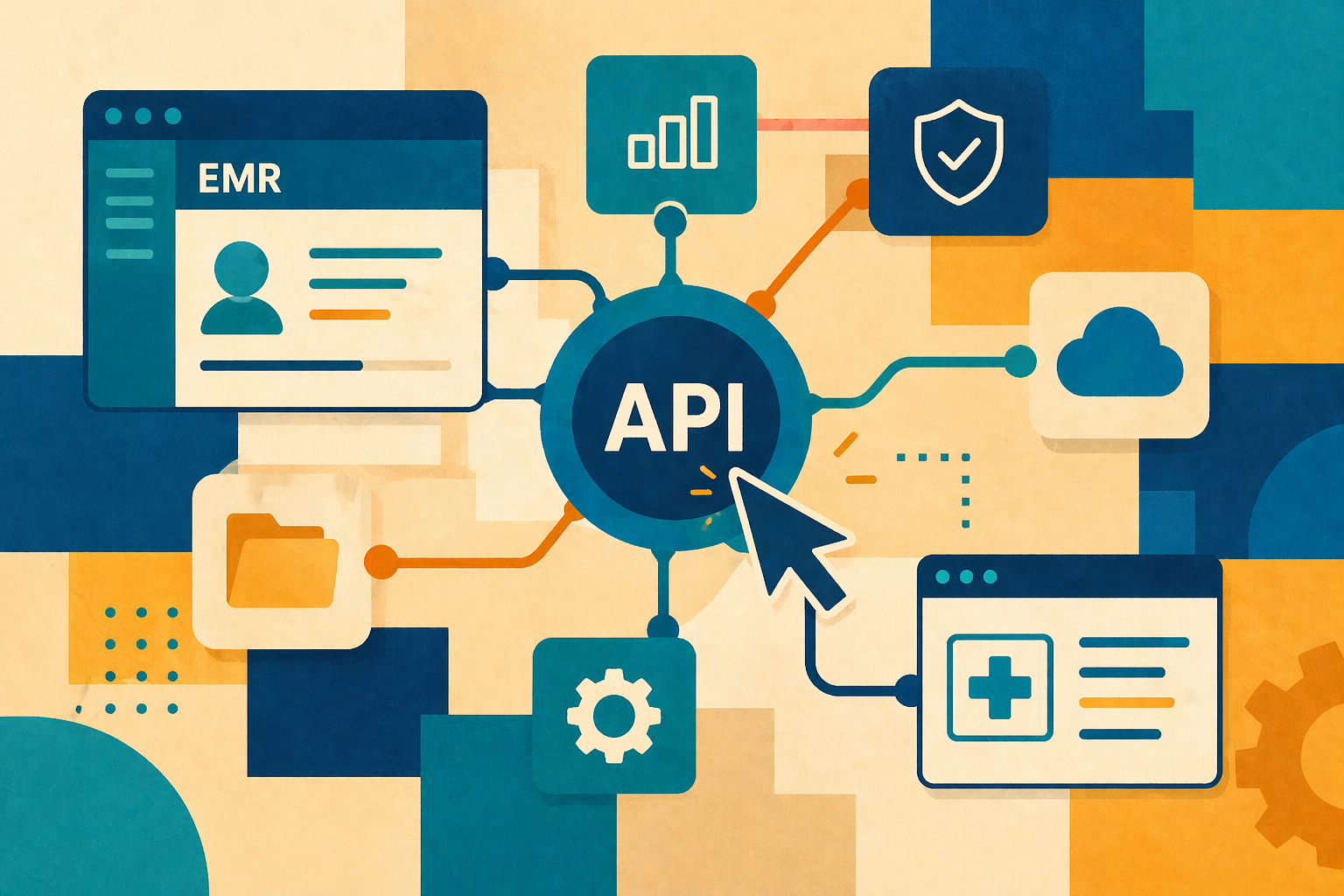
Not all integrations are equal: API vs RPA in healthcare
API or RPA? The way a system connects to your EMR shapes reliability, security, and how much work your team takes on behind the scenes. Here is a plain-language breakdown of the two approaches and how to evaluate them.
 Blog Post
Credentialing Software: The part that slows everything down
CAQH is required, constant, and easy to fall behind on. This post breaks down where clinics get stuck and what to look for in software that actually reduces the credentialing burden.
 Blog Post
Specialty-specific AI scribes: does one size really fit all?
For specialists, generic AI scribes fall short. This post explores why specialty-aware documentation, structured templates, and customizable workflows matter for accuracy, compliance, and efficiency.
 Blog Post
All-in-one healthcare AI vs point solutions: what actually makes sense for clinics?
Point solutions can solve isolated problems, but clinics often feel the operational drag between disconnected systems. This post breaks down when all-in-one healthcare AI infrastructure creates better outcomes.
 Blog Post
The Beam effect: better staff experience, better patient experience, better revenue
Operational strain in healthcare usually appears across staff experience, patient experience, and financial performance at the same time. This post explains why aligning intake, documentation, and revenue workflows drives compounding results.
 Blog Post
What Disney World taught me about building AI that actually helps clinicians
A lesson in system design: thoughtful orchestration and reliability are what make AI genuinely useful for clinical teams.
 Press Release
Beam Health and athenahealth partner to embed AI-powered automation across the athenaOne ecosystem
Beam and athenahealth partner to integrate AI-driven operational automation directly into athenaOne workflows.
 Blog Post
JPM 2026: when AI is everywhere, what actually helps clinicians is what matters
A perspective from JPM 2026 on separating AI noise from outcomes that truly improve clinician and operational performance.
 Blog Post
Why we built AI Credentialing and AI Migrate
Why Beam built purpose-fit agents to eliminate major onboarding and data migration bottlenecks for healthcare organizations.
 Press Release
Beam Health announces launch of AI Credentialing and AI Migrate
AI Credentialing and AI Migrate automate provider onboarding and data movement to remove operational bottlenecks.
 Blog Post
A year of learning, building, and listening
A reflection on lessons from customers, product development, and execution over the last year at Beam Health.
 Press Release
Beam Health reflects transformative year of growth and product expansion
Year-in-review of 300% growth, refreshed brand, expanded AI platform, new partnerships, and an upcoming athenahealth collaboration.
 Blog Post
Why the real change in healthcare won't come from the loudest conversations about AI
The biggest gains in healthcare AI come from practical execution inside day-to-day workflows rather than headline-driven narratives.
 Blog Post
The future of healthcare won't be built on more tools. It will be built on better infrastructure.
Sustainable transformation comes from connected infrastructure that removes operational friction, not another disconnected point solution.
 Press Release
Beam Health partners with Keragon to power healthcare automation
Our strategic partnership with Keragon will bring seamless, end-to-end automation to specialty clinics and surgical centers through AI-driven operational workflows and robust automation.
 Blog Post
Time is the most valuable resource in healthcare and we're wasting it
Healthcare organizations are spending their most limited asset, clinician time, on fragmented workflows instead of patient care.
 Press Release
Beam Health's AI Platform is now powered by GPT-5
Beam is excited to announce a major upgrade! Our AI platform is now powered by GPT-5, the latest and most advanced language model from OpenAI. This leap forward means our platform delivers even smarter automation and faster responses.
 Blog Post
Why healthcare feels broken for clinicians and what needs to change
Most clinicians didn't go into medicine to manage billing codes or spend their evenings buried in documentation. They went into it to care for people. But today, the average provider spends 130 minutes per patient just on admin work.
 Case Study
How Precision Eye Care saved 1,800 hours in admin time this year
From dropped emails and clunky phones to seamless patient intake and automated billing, Beam helped Precision Eye Care create the kind of practice where technology supports care instead of slowing it down.
Book your demo
Pick a time below — no forms, no back-and-forth. We’ll walk you through how Beam fits into your practice.