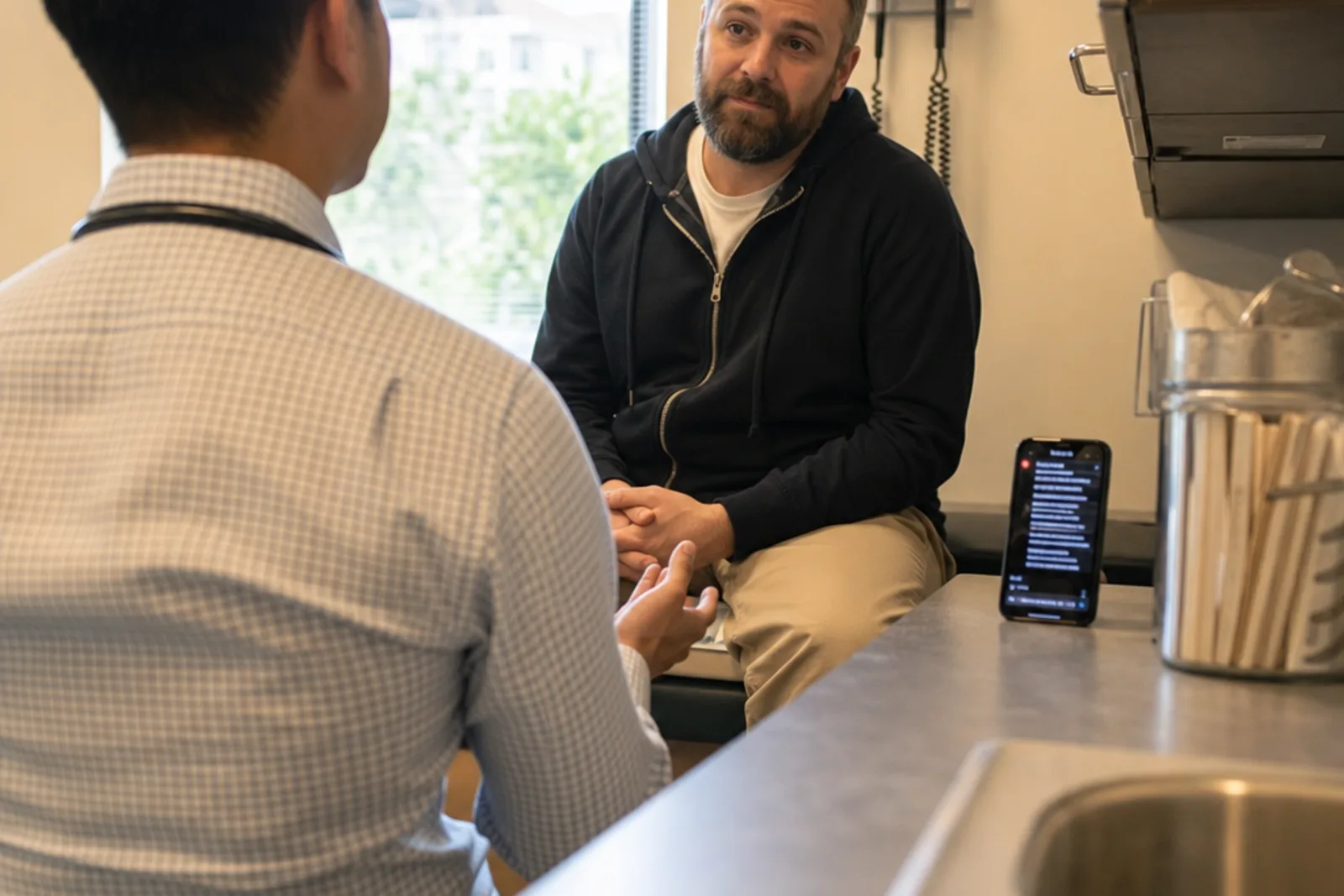
AI medical scribes have gotten very good, very quickly. A few years ago, simply being able to listen to a patient encounter and turn it into a coherent clinical note felt impressive. Today, that is just the starting point.
Products like Microsoft Dragon Copilot (which evolved from the DAX ambient documentation platform), DeepScribe, Abridge, Suki, Ambience, Nabla, Commure, and Beam can all help clinicians reduce the amount of time they spend documenting visits.
So if you're comparing AI scribes, "Does it generate a note?" isn't a particularly helpful question anymore. This might be a better one:
What do I still have to do after the note is generated?
This is where these platforms start to look different.
DAX, DeepScribe, and the increasingly crowded AI scribe market
Let's start with an important clarification. What many clinicians still call "DAX AI Scribe" has evolved. Microsoft's current platform is Dragon Copilot, which brings together the DAX ambient documentation lineage with traditional Dragon voice capabilities and newer clinical AI tools.
It is an especially compelling option for large health systems already working within Microsoft, Dragon, and supported enterprise EHR environments. Beyond ambient notes, Microsoft has expanded into areas like coding suggestions, after-visit summaries, and structured nursing documentation.
DeepScribe takes a more focused approach to ambient documentation. It offers specialty customization, coding support, and bidirectional EHR integrations that can sync notes into discrete fields. For practices looking specifically for a mature AI scribe with established specialty workflows, there is a lot to like.
And these aren't the only serious options anymore. Abridge, Ambience, Suki, Commure, and Nabla are all pushing ambient documentation beyond basic transcription — which is great news for clinicians, but it makes choosing one considerably more confusing.
The transcript isn't really the product anymore
Imagine two physicians finish identical appointments. Both of their AI scribes generate excellent notes.
The first physician opens the note, reviews it, copies the information into the appropriate fields, checks the diagnoses, makes a few formatting changes, looks up a code, and signs.
The second physician opens the chart and finds the information already organized into the appropriate fields. They review highlighted changes, confirm the documentation and suggested codes, and approve it.
Technically, both physicians used an AI medical scribe. Practically, they had very different experiences. That difference is becoming one of the most important things to evaluate.
Two scribes, two very different afternoons
- Note generated
- Copy into fields
- Reformat
- Review codes
- Edit
- Sign
- Note generated
- Fields populated
- Review changes
- Confirm codes
- Sign
Both systems generated a note. Only one finished most of the charting.
Structured EHR population is worth asking about
One of the easiest mistakes to make during an AI scribe demo is focusing entirely on the note itself. The note may look great on screen. But where does that information go?
Some products have increasingly sophisticated EHR integrations. DeepScribe, for example, publicly describes bidirectional integrations that can sync documentation into discrete fields. Nabla supports structured exports through both API-based and browser-based approaches. Microsoft embeds Dragon Copilot into supported EHR workflows.
Beam takes structured population particularly seriously. Instead of treating the encounter as one large block of generated text, Beam is designed to place documentation into the relevant fields of the existing EMR. For a clinician, that's a much more practical distinction than whether one AI writes a slightly nicer HPI.
The best question to ask during a demo: "Can you show me exactly what happens between pressing Stop and signing my chart?" Don’t let them skip any clicks.
Specialty matters more than a beautiful demo note
A primary care note and an ophthalmology note are not interchangeable. Neither are a follow-up, a consult, and a post-op visit.
Different specialties care about different findings, templates, terminology, procedures, and workflows. Even within the same specialty, individual providers have strong preferences about how their notes are organized.
That's why specialty customization deserves more attention than generic note quality. DeepScribe supports specialty-specific workflows, as do several other leading platforms. Beam's approach combines specialty-trained documentation with templates customized around the actual practice and provider.
The physician shouldn't have to adapt to the scribe — the scribe should adapt to how the physician practices.
| Ask this | Why it matters |
|---|---|
| Can you build our existing templates? | Generic templates often create more editing |
| Which specialties do you actively support? | Documentation needs vary significantly |
| Can individual providers customize output? | Physicians within one practice chart differently |
| Which exact EHR fields can you populate? | A finished note isn't necessarily a finished chart |
| What happens when the AI is uncertain? | Clinicians need a clear review process |
| How much editing happens after generation? | This determines the actual time saved |
How you review the AI matters too
No clinical AI gets everything right every time. That's why the review experience may be just as important as generation quality. If a physician has to reread an entire note word by word because they can't tell what the AI inferred or changed, some of the promised time savings disappear.
Beam uses a redline-style approval workflow so clinicians can see proposed documentation and review changes before finalizing them. That human checkpoint is intentional.
The goal of an AI medical scribe shouldn't be to ask physicians to blindly trust AI-generated documentation. It should make it faster for them to understand, verify, and approve what was documented.
Then there's speed — but measure the right kind
Almost every AI scribe can tell you how quickly it generates a note. That isn't necessarily the metric clinicians care about.
What matters is time to finished chart. A note that appears in five seconds but requires another four minutes of editing isn't necessarily faster than one that takes twenty seconds and arrives essentially ready for approval.
In Beam's internal performance data, charts are completed an average of 24 seconds after the appointment ends — where "complete" means signed and closed.
That's the kind of metric we'd like to see become standard across the industry. Not "How fast does your AI generate text?" — how long until the clinician is actually done?
Don't forget what happens down the line
This may be the biggest difference between evaluating an AI scribe as a standalone product and evaluating it as part of a clinical workflow. Documentation doesn't exist just to document the visit. It supports coding. In turn, coding supports the claim. The claim affects reimbursement. And weak documentation can eventually come back as a denial.
Beam uses structured encounter documentation to support CPT and ICD-10 recommendations, modifier suggestions, and documentation-gap detection. That information can then continue into claim validation and revenue workflows.
Other major vendors are moving downstream too. Ambience has invested heavily in coding and revenue integrity, Commure connects ambient documentation with RCM, and platforms including Abridge and Suki have expanded their coding capabilities.
So the question isn't whether a vendor has "AI coding." Ask how deeply everything is actually connected. Can it show what documentation supports a suggested code? Can it identify when documentation is missing? Does information flow into claim scrubbing? Can downstream denial patterns eventually tell you something about how encounters are being documented upstream?
That's a much deeper use of an AI scribe than writing a SOAP note faster.
So which AI medical scribe is best?
There isn't one answer.
A large health system deeply invested in Microsoft and Dragon may have very different priorities from an independent specialty group. DeepScribe may be a strong fit for organizations looking for a focused ambient documentation platform with established specialty workflows. Abridge has strong independent industry recognition. Ambience and Commure deserve serious consideration when revenue-cycle capabilities are a priority.
Beam makes the most sense for practices looking beyond the scribe itself — particularly those that want structured EMR population, specialty-specific workflows, visible clinician approvals, and a closer connection between documentation and revenue operations.
That's why we'd be cautious about choosing an AI medical scribe based on the prettiest demo note. Each vendor can show you a good note. But what happens when the AI isn't sure? Ask them to build one of your templates instead of showing theirs. Ask which fields they can populate in your EHR. Ask how many clicks remain between the end of the appointment and a signed chart.
And finally, ask: "What work still has to happen after your AI is done?"
The answer will probably tell you more than the demo.
Ask us what happens after the note.
Beam combines structured EMR population, specialty-trained templates, redline-style clinician review, and coding recommendations that flow into claim validation — so the chart is finished, not just the note.
See Beam AI Scribe in action