
A claim gets submitted. Then the waiting begins.
Maybe it gets paid. Maybe the payer rejects it. Maybe part of the balance shifts to the patient. Maybe something needs to be corrected and resubmitted. Or maybe the ERA arrives and someone still has to figure out what happened.
Multiply that across thousands of claims, and medical A/R management quickly becomes less about billing and more about keeping track of an enormous number of loose ends.
Beam’s approach is to use AI to help practices find those loose ends earlier, prioritize what needs attention, and automate more of the work between submitting a claim and actually getting paid.
A/R days are the symptom, not the problem
Practices often watch A/R days in healthcare as the headline number. But what does it mean? Mostly, if your A/R days are climbing, money is taking longer to make its way back to the practice.
What’s the cause? Maybe one payer is suddenly taking longer to reimburse. Denials may be sitting untouched. Outstanding patient balances may be accumulating. Or payments may have arrived but haven’t been posted yet.
Reducing A/R days depends on dozens of smaller tasks happening faster and more consistently.
Start by knowing what’s actually outstanding
You can’t manage A/R particularly well if you don’t have a clear picture of it.
Beam helps practices track outstanding balances and understand where revenue sits across the cycle. Instead of simply seeing one giant A/R number, teams can identify which claims or balances need attention and where problems are beginning to accumulate.
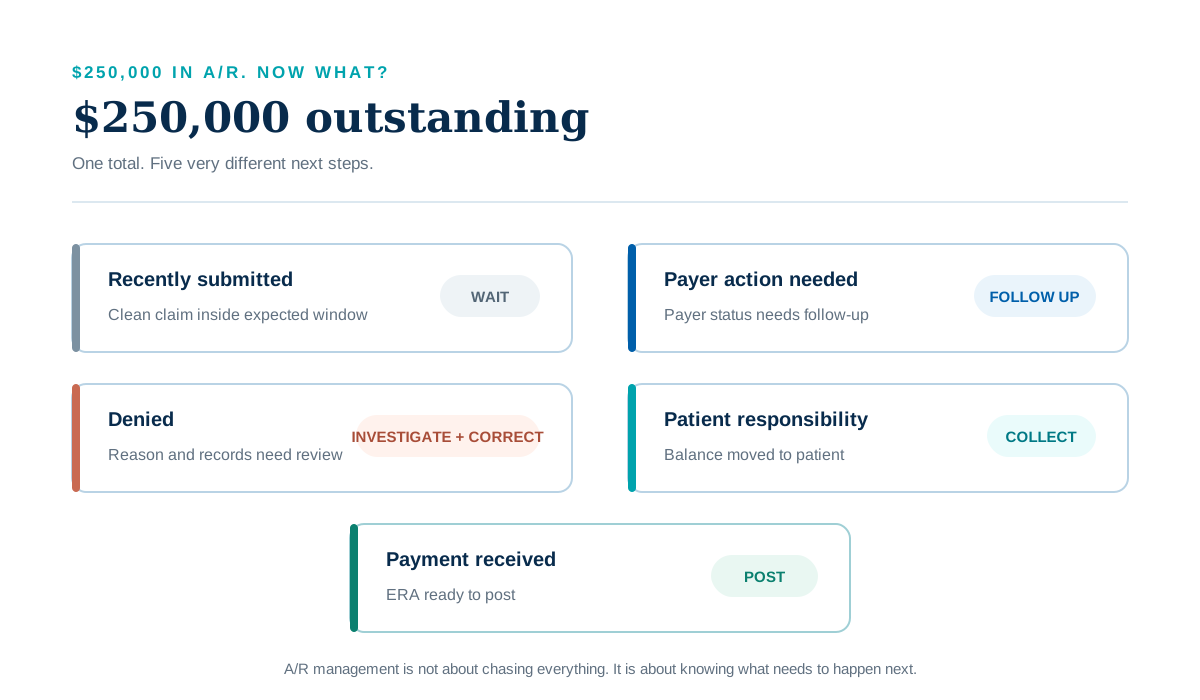
That visibility matters because not every outstanding dollar deserves the same response. A recently submitted clean claim is very different from a balance that has been sitting untouched for 90 days.
Revenue forecasting makes A/R less reactive
Traditional A/R reporting tells you what has already happened. Forecasting asks what is likely to happen next.
By looking across claims, balances, payer behavior, and historical payment patterns, revenue forecasting can help practices get a clearer picture of expected collections and potential delays.
This can also help operationally. If collections begin moving differently than expected, the practice can investigate the underlying claims instead of waiting for the change to become obvious in next month’s A/R report.
In other words, the goal is to spot the traffic jam while it’s forming, not after you’ve been sitting in it for an hour.
Denials shouldn’t sit around waiting for someone to notice
A denial isn’t necessarily lost revenue. But if it sits for too long, it may become lost revenue.
Denial follow-up traditionally requires staff to identify the denial, understand the reason, find the relevant claim and documentation, determine the appropriate next step, make the correction or appeal, and remember to check on it again later. This whole process requires a lot of human coordination.
Beam helps organize denial follow-up around the action that needs to happen next. Instead of leaving staff to repeatedly comb through queues, AI can help surface denied or rejected claims, identify relevant issues, and provide next-step recommendations so teams can focus their attention where it is actually needed.
A recurring denial from one payer, code, provider, or workflow may also point to something that can be fixed upstream.
ERA posting is another place small delays add up
Getting paid isn’t quite the end of the revenue cycle. The payment still needs to make it into the right place.
Electronic remittance advice, or ERA, contains information about how a payer adjudicated a claim: what was paid, adjusted, denied, or assigned to patient responsibility. Posting that information manually across a large volume of claims can create another administrative bottleneck.
Automating ERA posting helps move those payments and adjustments into the appropriate records more efficiently, while exceptions can be surfaced for review. Taking repetitive posting work off someone’s plate means the A/R team can spend more time on the claims that actually require judgment.
The interesting part is connecting all four
Balance tracking, revenue forecasting, denial follow-up, and ERA posting are useful by themselves. They become much more powerful when they’re part of the same workflow.
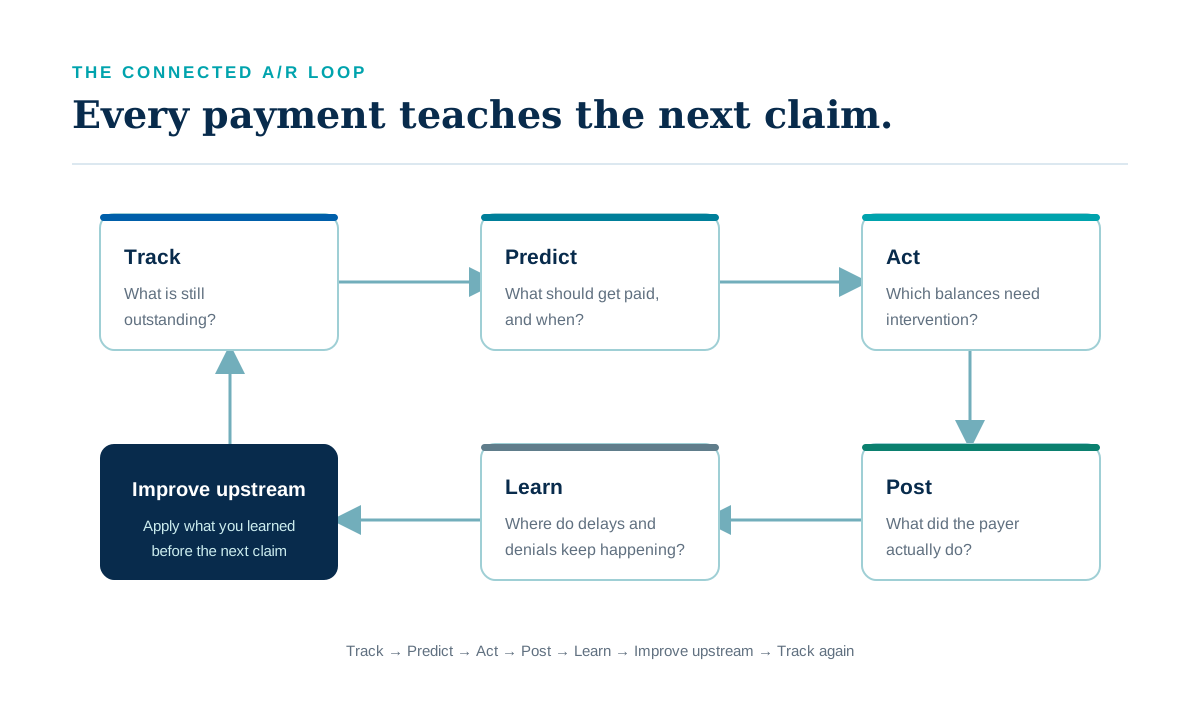
Balance tracking tells you where the money is. Forecasting helps anticipate when it should arrive. Denial follow-up helps move stuck claims forward. ERA posting closes the loop when payment comes back.
The best way to reduce A/R may happen before A/R
Beam doesn’t only look at a claim once it becomes an outstanding balance.
The same platform can work earlier in the revenue cycle, including eligibility verification, patient information, clinical documentation, coding, and pre-submission claim validation.
Some of the best A/R work is preventative. If an insurance problem can be caught before the visit, fix it then. If documentation doesn’t support a code, catch it before submission. If a claim has an obvious error, fix it before the payer sees it. And if a denial still happens, use what you learn from it to improve the next claim.
That’s how accounts receivable in healthcare becomes less of a downstream cleanup operation and more of a feedback loop.
A/R management should tell you what to do next
A giant report can tell you that your practice is owed money. It doesn’t necessarily tell you what to do about it.
That’s where better A/R management becomes valuable. Beam helps practices understand what’s outstanding, forecast incoming revenue, keep denial follow-ups moving, and automate ERA posting while connecting those workflows to the rest of the revenue cycle.
The goal is to shorten the distance between care delivered and revenue collected.
Know what needs attention before revenue gets stuck.
Beam connects balance tracking, forecasting, denial follow-up, and ERA posting with the upstream workflows that determine whether a claim gets paid.
See how Beam approaches revenue cycle