
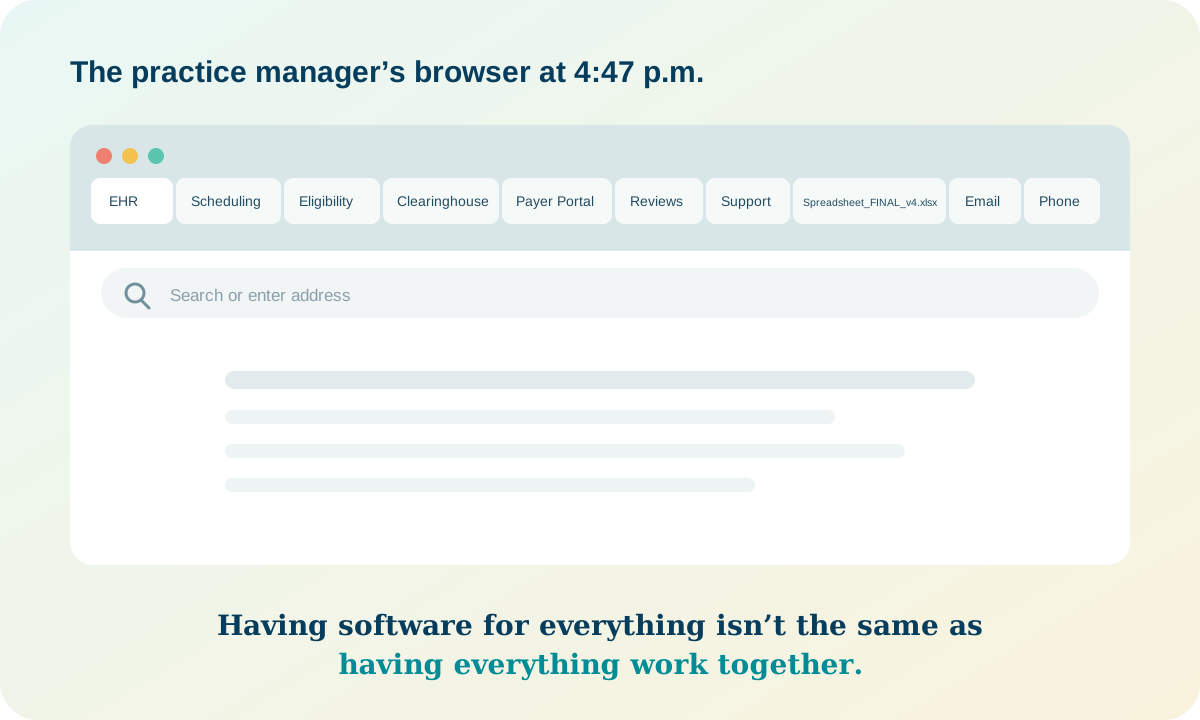
It’s 9:07 a.m. and a practice manager might have the EHR open. And the clearinghouse, the eligibility portal, and the scheduling system. Maybe there is also a spreadsheet with outstanding claims, another tracking provider credentials, and a few support tickets waiting for responses.
For many practice managers, this is a normal day. But does it have to be?
Healthcare has spent years adding software to solve individual problems. The result is that a practice can have a tool for nearly everything and still leave its staff doing an enormous amount of work just to connect them.
This is the tab problem.
One clinic, a dozen places to look
Think about what happens when a patient calls with a relatively simple question:
“Why did I get this bill?”
Answering it might require checking the EHR for the encounter, the billing system for the claim, the clearinghouse for its status, the payer portal for the response, and perhaps the patient’s insurance information to figure out where something went wrong.
Staff become the integration layer. They move information from one system to another, check whether tasks were completed, follow up on exceptions, and remember which portal contains which piece of information.
That work does not appear on the vendor invoice, but someone at the practice is paying for it with their time.
Follow a practice manager for a day
At 8:00 a.m., the first patients are arriving. The front desk is checking registration forms, verifying insurance, answering calls, and figuring out why one patient’s coverage is not coming back correctly.
At 10:30 a.m., a provider has several unfinished charts. Someone needs to make sure documentation is complete so coding and billing do not get held up.
By 1:00 p.m., claims are moving through the clearinghouse. Some need attention. Others have been rejected. Someone needs to figure out why.
At 3:00 p.m., tomorrow’s schedule has two cancellations. The team starts calling patients who might want the openings.
At 4:30 p.m., a negative review comes in. There are outstanding support tickets. A payer still has not responded about an old claim.
Meanwhile, the practice manager is bouncing among systems trying to keep the entire thing moving.
The problem is not necessarily too much software
“Use fewer tools” sounds like the obvious solution, but most of this software has a place.
Replacing everything just to consolidate the technology stack can create an entirely new headache. The more useful question is:
How much work does your staff have to do between those systems?
If an eligibility response comes back, does someone need to enter it somewhere else? If a claim is rejected, does someone have to hunt down the corresponding documentation? If tomorrow has an unexpected opening, does someone have to start dialing down a patient list? If a provider finishes an encounter, how many steps stand between that moment and a completed chart?
Every handoff is a little bit of work. Across a day, those handoffs can add up to hundreds.
Your staff should not be the API
Good healthcare technology should not require every system to be replaced by one enormous piece of software. It should allow information and actions to move between the systems the practice already uses.
That is the approach Beam takes. Beam connects with more than 60 healthcare systems and is designed to sit across a practice’s existing technology rather than requiring a rip-and-replace project.
Patient information collected during digital intake can help prepare the chart. Insurance can be checked in real time. Encounter documentation can feed structured information into coding. Claims can be checked before submission. Denial and A/R patterns can be traced back to earlier parts of the workflow.
The systems that work can remain. The practice manager just does not have to personally shuttle information between them.
One operational layer, without starting over
Intake, AI calling, ambient documentation, revenue cycle workflows, credentialing, growth, and support are not completely separate problems inside a practice.
A patient books an appointment, which triggers intake, which affects eligibility, which affects the encounter, which affects documentation, which affects coding, which affects the claim, which affects revenue.
Connecting those steps means information gathered in one part of the practice can be useful in another. And it should not require a clinic to throw away the systems that already work.
Maybe the tab count is not the problem after all
A practice manager might always have too many tabs open. Healthcare is healthcare.
But those tabs should not represent ten separate jobs that someone has to coordinate by hand.
The goal is to get to the end of the day without spending half of it copying information, checking statuses, chasing routine tasks, and figuring out which vendor to call.
Your staff should not have to connect every system by hand.
Beam works across the tools a practice already uses, helping information and routine tasks move between intake, documentation, billing, credentialing, growth, and support.
Talk through your current workflow