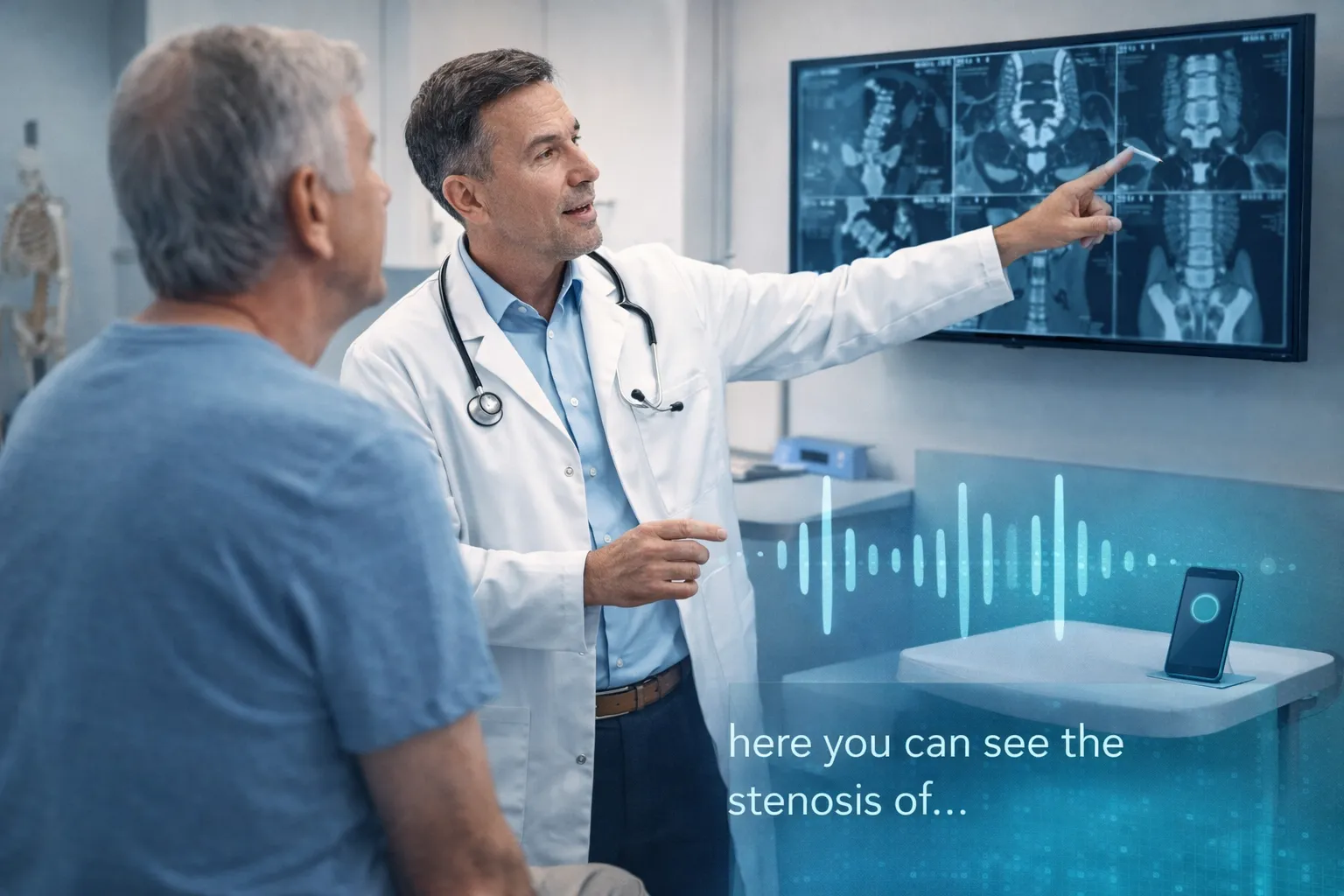
When physicians evaluate our AI scribe, the first question is usually about accuracy. Does it capture the conversation correctly? Does it actually reduce documentation time if it needs redline approval? Those are important questions. But for specialists, they are not the only ones.
A cardiologist, an orthopedist, and a dermatologist do not document the same way. Their templates, chart needs, and appointment workflows are different. Even the way they think through assessments and plans is different. That is where one-size-fits-all AI starts to show its limits.
Why generic AI falls short in specialty care
Many AI scribes are designed to generate a clean transcript and convert it into a general SOAP-style note. For some primary care workflows, that may be sufficient. In specialty practices, documentation is more structured and often more nuanced.
Templates may require:
- Detailed procedure fields or structured exam components
- Context pulled from imaging or hospital records
- Specialty-specific terminology
- Custom macros or smart phrases
- Required documentation for payer compliance
If the AI does not understand how those pieces fit together, providers end up editing heavily after the visit. Instead of saving time, they are refining output that almost works. The difference between almost right and ready to sign is significant.
The role of structured templates
In specialty environments, documentation is rarely free-form. It is template-driven and often tied directly to billing requirements. An AI scribe that simply summarizes a conversation without understanding how it maps to structured EMR fields creates extra steps. Providers still need to click into templates, reformat sections, or re-enter key data.
A specialty-aware AI scribe understands how the conversation connects to those structured fields from the start. It extracts relevant components and aligns them directly with the practice's documentation framework. That alignment is what makes automation feel useful rather than disruptive. It is truly one-click charting.
Training across specialties matters
Specialty workflows are not interchangeable. Ophthalmology notes look different from orthopedic notes. Cardiology assessments differ from dermatology encounters. Even within a specialty, documentation preferences can vary by provider.
Beam's AI scribe has been trained and refined across multiple specialties to account for those differences. The system does not treat every encounter as a generic conversation. It is designed to recognize specialty-specific patterns, terminology, and documentation structures. Our scribe workflows are customizable. Whether a provider needs to dictate extra notes, upload audio from their phone, or pull from the patient chart to the note, we work to blend in seamlessly.
That training and customization reduces the amount of post-visit editing required. It also improves consistency across providers within the same practice. For specialists, consistency is not just about neat notes. It supports compliance, coding accuracy, and smoother handoffs.
What to look for when evaluating an AI scribe
If you are considering an AI scribe for your practice, it helps to look beyond accuracy metrics.
Ask questions like:
- Does the system align with our existing templates?
- Can it populate structured EMR fields directly?
- Has it been trained on workflows specific to our specialty?
- How much editing is required before a note is ready to sign?
- Does it adapt to individual provider preferences over time?
A strong AI scribe should fit into your workflow, not force you to redesign it.
One platform, many specialties
Beam was built with the understanding that specialists do not want generic solutions. They want tools that respect how they practice. By supporting specialty-specific templates and custom documentation workflows, Beam's AI scribe integrates directly into the way clinics already operate.
The goal is not to replace clinical judgment or standardize every encounter. It is to reduce repetitive documentation work while preserving each provider's approach.
One size may be simpler to build, but in specialty care, precision matters.